Metronidazole
Bacterial vaginosis treatment
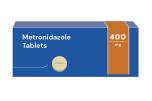
Metronidazole 400mg
You won't be charged if we can’t prescribe.


Our online consultation helps us prescribe the right treatment for your symptoms.
What happens next

Order online
Choose your treatment and tell us a bit about your symptoms and your health in our online consultation form.

Review and prescribe
We might text you for more information before we can prescribe. Once our team have done your prescription, the pharmacy will have it dispatched within 1 working day.

Free discreet delivery
Your order will be delivered in plain packaging with trackable delivery included. We'll send you updates and a tracking code by text message.
Treatment at home
Follow our simple instructions and take care of your symptoms. Text our expert clinicians if you need support. We’re here to help.
Treating bacteria vaginosis
How to take metronidazole
Metronidazole is an antibiotic that comes as a tablet. To treat BV, take 1 tablet twice a day for 7 days.
Swallow the tablets with water, during or after a meal. Do not chew the tablets.
Take all of the tablets, even if your symptoms improve before you finish the course.
If you miss a dose of metronidazole, take it as soon as you remember. If it’s nearly time for your next dose, leave the missed dose and take your next dose at the usual time.
This medication is safe to use when you’re pregnant or breastfeeding. It can make breast milk taste different, which might make feeding harder.
You should not drink alcohol while taking this medication and for 48 hours (2 days) after your last dose. Metronidazole can interact with alcohol and cause side effects like being sick, flushing or a racing heart. Even small amounts of alcohol can bring on side effects.
Side effects of metronidazole
Not everyone will get side effects when they take metronidazole, but you might experience:
feeling or being sick (nausea)
diarrhoea
To help manage these side effects, take the tablets after eating, eat plain, non-spicy foods and drink plenty of water.
If you are sick or have diarrhoea for more than 24 hours, contact a doctor.
About bacterial vaginosis
Bacterial vaginosis (BV) is caused by changes to the natural bacteria in the vagina. The imbalance of bacteria can cause changes to vaginal discharge.
You might have BV if you notice your discharge:
has a strong fishy smell, particularly after sex
is a white or grey colour
is thin and watery
BV does not cause any itchiness or pain. If you have these symptoms as well as changes to your discharge, contact your GP or sexual health clinic for an appointment. You might also want to test at home for trichomoniasis, as this can cause these symptoms.
BV is not an STI and you can get it without having sex. But you are more likely to experience it if you are sexually active.
BV is not usually serious, but it does need treatment. Left untreated, it can increase your risk of getting STIs. And if you’re pregnant, there’s a small chance having BV could cause complications.
How to avoid BV
Often, BV will come back and you will need to treat it again. There are some things you can try yourself to reduce the chance of it returning and to help any symptoms.
Your vagina does a great job of keeping itself clean, so caring for your genitals does not need to be complicated. Washing the external area daily with warm water when you’re having a bath or shower is all you need. Even gentle soaps can cause irritation.
You should avoid:
Perfumed soaps, shower gels and lotions
Intimate or vaginal washes or deodorants
Douching or washing inside the vagina
Over-washing - once a day is all you need
If you smoke, this can increase your chance of getting BV. The best way to stop smoking is with specialist support and treatment, you can find free specialist services or speak with your GP about stopping.
Using barrier methods like condoms, gloves and dental dams during sex can help prevent BV.
If you get recurring BV – getting it more than 3 times a year – you may be referred to a genitourinary medicine (GUM) specialist to discuss longer-term treatments.

Reviewed by
Dr Paula Baraitser, Former Medical Director, SH:24Do you need help with something else?
Find your local sexual health clinic.
Find your local pharmacy.